

Understanding the Differences Between Tubular and Panel Radiators
When specifying a heat emitter for a domestic or commercial project, the choice often comes down to tubular radiators or standard panel radiators. While both operate within conventional low-temperature hot water (LTHW) systems, their construction methods, heat transfer characteristics, durability, and long-term performance differ in several important ways. This article provides a technical comparison between tubular radiators manufactured in-house and standard pressed steel panel radiators, focusing on heat output, lifespan, durability, and suitability for UK buildings. Particular attention is given to applications where glazing, restricted wall space, or elevated heat loss influence radiator selection.
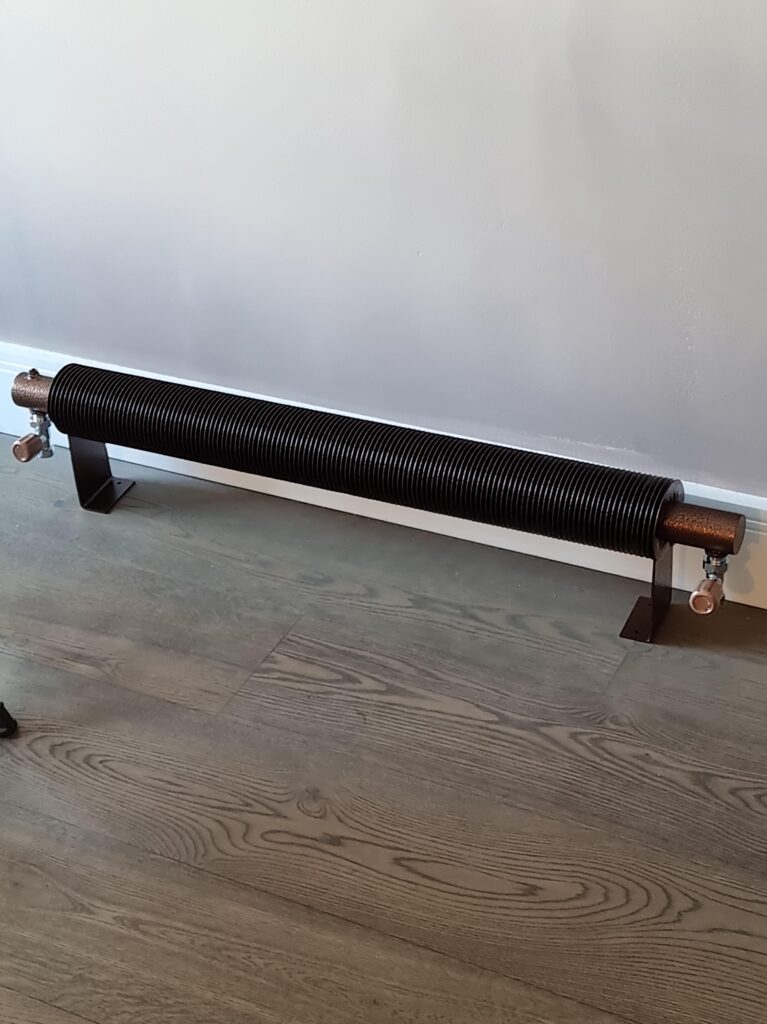
Construction and Manufacturing Method Tubular Radiators Manufactured In-House
In-house manufactured tubular radiators are produced using a continuous steel fin wound around a medium or heavy-gauge steel tube. The fin is mechanically bonded along the full length of the tube, creating consistent contact for heat transfer. In addition, the fin is welded to the tube at each end to prevent movement or deterioration over time. This construction method results in a permanent mechanical and thermal bond, maintaining heat output stability throughout the operational life of the radiator. Manufacturing in-house also allows tighter control over material specification, dimensional tolerances, and overall build consistency.
Standard Panel Radiators
Standard panel radiators are typically manufactured from pressed steel sheets welded together to form internal water channels, with convector fins fitted between panels. These units are mass-produced and designed for general-purpose heating applications.
Their performance depends heavily on internal fin condition and system water quality. Over time, debris or corrosion within the system can reduce water-flow across the fins, affecting heat output efficiency.
Heat Output and Thermal Performance
Tubular Radiators
Tubular radiators deliver heat predominantly through natural convection across the continuous fin surface. The spiral fin design increases surface area and promotes steady air movement, allowing high heat output from a compact unit.
Key thermal characteristics include:
• High output relative to physical size
• Even heat distribution along the full length of the radiator
• Effective perimeter heating, particularly in front of glazing
These properties make tubular radiators well suited to areas with high heat loss, including glazed extensions, bay windows, conservatories, and commercial spaces.
Standard Panel Radiators
Panel radiators combine radiant output from the panel surface with convective output from internal fins. Achieving higher outputs typically requires increased panel height, width, or depth. In spaces with limited wall area or extensive glazing, this can restrict layout flexibility. Output can also decline if internal fins become obstructed over time.

Durability and Expected Lifespan Tubular Radiators The steel tube and fin construction used in tubular radiators provides a robust, long-life heating solution. The mechanical bond between fin and tube does not loosen with thermal cycling, ensuring consistent heat transfer throughout the radiator’s service life. The exposed fin design also allows easier inspection and cleaning, which is particularly beneficial in commercial or public buildings.
Standard Panel Radiators Standard panel radiators generally have a shorter operational lifespan, particularly in systems where water quality fluctuates. Internal corrosion or fin degradation can reduce efficiency before external signs of wear become apparent. In higher-demand environments, replacement may be required sooner than with tubular alternatives.
Space Efficiency and Installation Flexibility Tubular radiators are typically low-level and compact, making them suitable for floor-mounted or low wall-mounted installation. This allows:
• Use beneath glazing without obstructing views
• Installation under benches, seating, or window sills
• Effective heating in narrow or awkward spaces
Standard panel radiators require clear wall space and sufficient height, which can limit positioning options in modern building designs or extensions.
Typical Applications and Use Cases in UK Buildings
Tubular radiators are commonly specified where high heat output is required from a discreet, low-profile unit. Their performance characteristics make them effective in buildings with extensive glazing or where cold air downdraughts are a concern.
They are frequently used in schools, churches, sports facilities, and commercial buildings, where durability, service life, and consistent output are important considerations.
Standard panel radiators remain suitable for conventional domestic rooms with moderate heat loss and sufficient wall area. However, achieving equivalent output in challenging spaces often requires larger or deeper units.
Discuss the Right Heating Solution for Your Project
Choosing between tubular and panel radiators should be based on thermal demand, building layout, glazing levels, and expected service life, rather than initial cost alone.
If you are assessing heating options for a UK project:
• Get your Quote: Speak with a technical advisor about tubular radiator sizing and configuration
• Request a Brochure or Specifications PDF: Access detailed technical data and installation guidance
• Compare Heating Options: Review tubular radiators alongside other perimeter heating solutions
For a free, no-obligation quotation, call 01268 545154 or email sales@gunningheating.co.uk.